New sod goes down in Mooresville looking finished, and that is the trap. Under the green surface, there is no root connection to the soil yet, just a thin mat of grass and dirt waiting to knit in. The first month decides whether it becomes a lawn or a collection of shrinking, browning rectangles, and almost everything in that month comes down to water, timing, and staying off it.
Sod roots grow downward looking for moisture. If the moisture is at the surface because you water lightly and often in the first days, roots start shallow and fast. As watering shifts deeper and less frequent over the following weeks, roots follow it down. That progression, set out week by week below, is the calendar your new lawn is actually living on, whatever the weather is doing.
The first month, week by week
| Week | Water | Traffic and mowing | What you should see |
|---|---|---|---|
| Week 1 | Keep the sod and the soil beneath it consistently moist, watering daily or more in heat so seams never dry out | Stay off it except to water; no mowing | Seams tight, color holding, sod cannot be lifted at corners by the end of the week |
| Week 2 | Begin stretching intervals slightly while keeping the root zone moist, especially edges and sunny seams | Light foot traffic only; still no mower | Roots resisting a gentle tug; new growth starting |
| Week 3 | Shift toward deeper, less frequent watering that soaks several inches down | First mow if the sod is rooted, at a high setting, with a sharp blade | Even green-up; seams disappearing |
| Week 4 | Settle into a normal deep-watering rhythm based on rainfall, roughly an inch a week including rain | Normal mowing; keep heavy play and equipment off a while longer | A lawn that behaves like a lawn, with roots several inches down |
The details inside that calendar matter. Seams and edges dry first, especially along driveways and sidewalks where reflected heat works on the sod all afternoon, so those strips may need a hand-water while the middle of the yard is fine. In a Piedmont summer, new sod laid into heat needs its early water without apology; the deep-and-infrequent rule is for established lawns, and applying it in week one is how sod dies with the sprinkler running on schedule.
Mowing new sod without tearing it
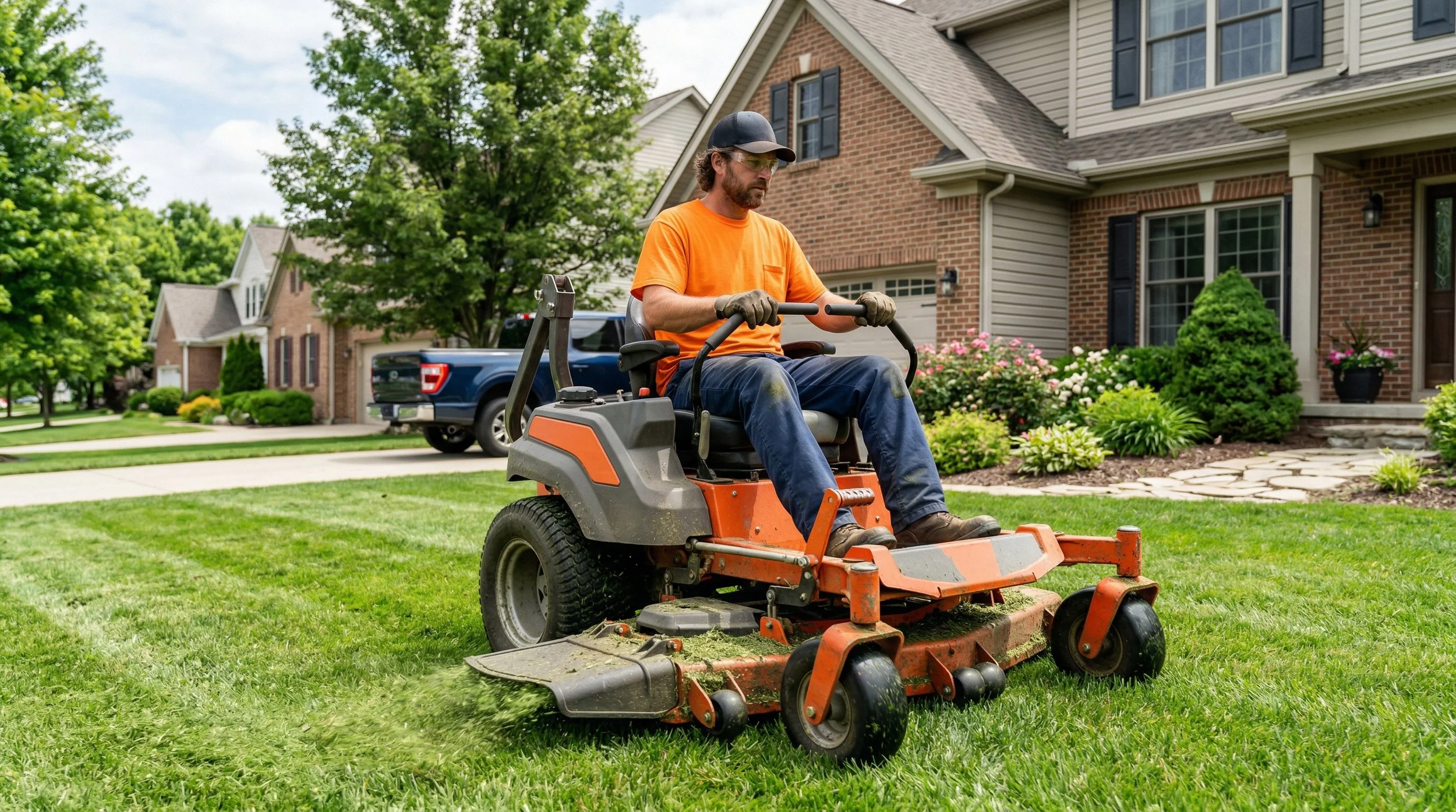
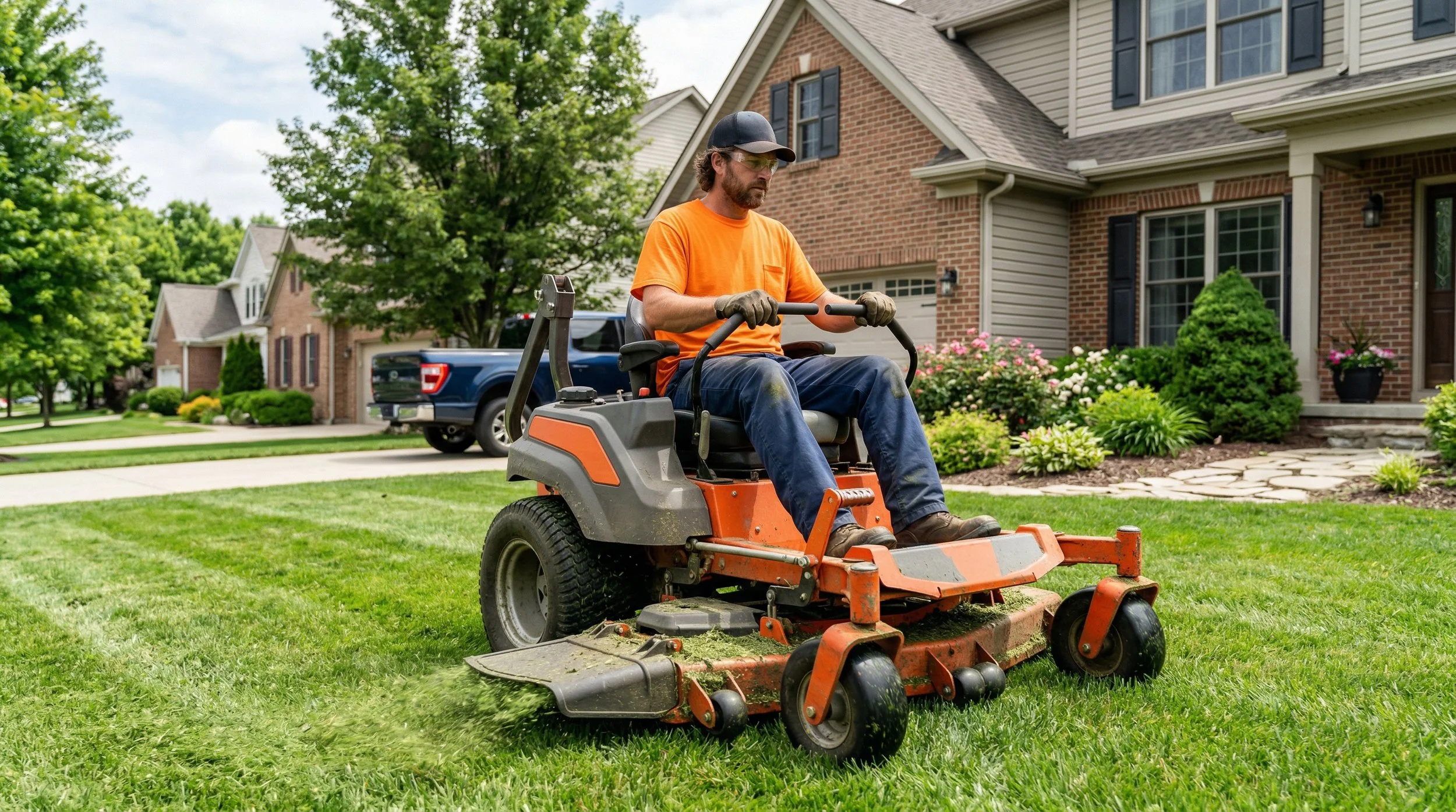
The first mow waits until the sod resists a gentle corner tug, meaning roots have grabbed. Mowing earlier risks the mower's wheels and suction pulling pieces loose, and scalping is a real risk because new sod sits unevenly until it settles. Set the deck high, take off no more than the top growth, make sure the blade is sharp since a dull blade tears soft new grass instead of cutting it, and avoid tight turns that pivot a wheel on one fragile spot. If the lawn grew shaggy while you waited, bring the height down across two mows over a week rather than in one pass.
Traffic rules that people break
Every shortcut shows. Kids and dogs sent back onto the yard in week one shift pieces and break the root contact the whole month is building. A mower stored on the new sod, a delivery driver cutting the corner, a sprinkler dragged daily across the same line, each leaves a mark that takes the rest of the season to fade. Keep the new area boring: water, watch, wait. Fertilizer is also a wait item; sod arrives already fed for establishment, and adding more in the first weeks pushes top growth at the expense of the roots you are trying to grow. If part of the yard struggles despite the schedule, patchy seams, persistent wilt in one zone, standing water in another, that diagnosis is worth a professional look from Tailored Lawn Care & Landscaping before a small installation problem becomes a full redo.
Common questions
How do I know if my new sod is rooting?
Gently tug a corner of a piece. In the first days it lifts freely; by the end of week two it should resist because roots have grown into the soil below. No resistance by week three means water or soil contact needs attention.
My sod is turning yellow at the seams. What went wrong?
Seams dry out first, especially along pavement in summer heat. Yellow seams usually mean those edges missed water while the centers got plenty. Hand-water the seams back to moist and tighten the early watering schedule.
When can the kids and dog use the yard again?
Light use after about three weeks, once the sod is rooted and has been mowed once. Heavy play, digging, and concentrated traffic in one spot should wait until the lawn has had a full month to establish.
Photos in this guide are representative stock images.
← All guides from Tailored Lawn Care & Landscaping← Back to Tailored Lawn Care & Landscaping