Stand on a Charlotte-area sidewalk in October and you can read the neighborhood's grass choices from the curb. Some lawns are green and getting greener. Others are fading to straw for the winter. Those are the two lawns of the Piedmont: tall fescue, a cool-season grass that works hardest in fall and spring, and bermuda, a warm-season grass that owns the summer and sleeps through winter. This is a practical guide to telling them apart in your own yard and running each one on its own rhythm, including the overseeding habits that keep each thick.
The distinction drives everything else. Fertilizer timing, mowing height, seeding season, and drought behavior all follow from which grass you actually have, and the most common lawn failures around Mooresville and the wider Charlotte area come from running one grass on the other grass's calendar.
Telling them apart in your yard
- Check the calendar first. Green and growing in November or March points to fescue. Brown from first frost until late spring, then aggressively green in July, is bermuda's signature.
- Look at how it spreads. Bermuda sends runners across soil and pavement edges, above and below ground, and fills bare spots by itself. Fescue grows in upright clumps from a central crown and never creeps; a bare spot in fescue stays bare until seed arrives.
- Feel and inspect a blade. Fescue blades are wider, flat, and visibly veined, growing in bunches. Bermuda blades are finer and narrower on wiry stems that root at the joints.
- Check the shade. Grass holding on under a mature oak is almost certainly fescue; bermuda thins to dirt in sustained shade. A yard that is thick in sun and bare under trees is often bermuda that has reached its limit.
- Note the seeding rhythm the yard expects. If the lawn needs annual fall seeding to stay thick, it is fescue. If it repairs itself each summer without seed, it is bermuda.
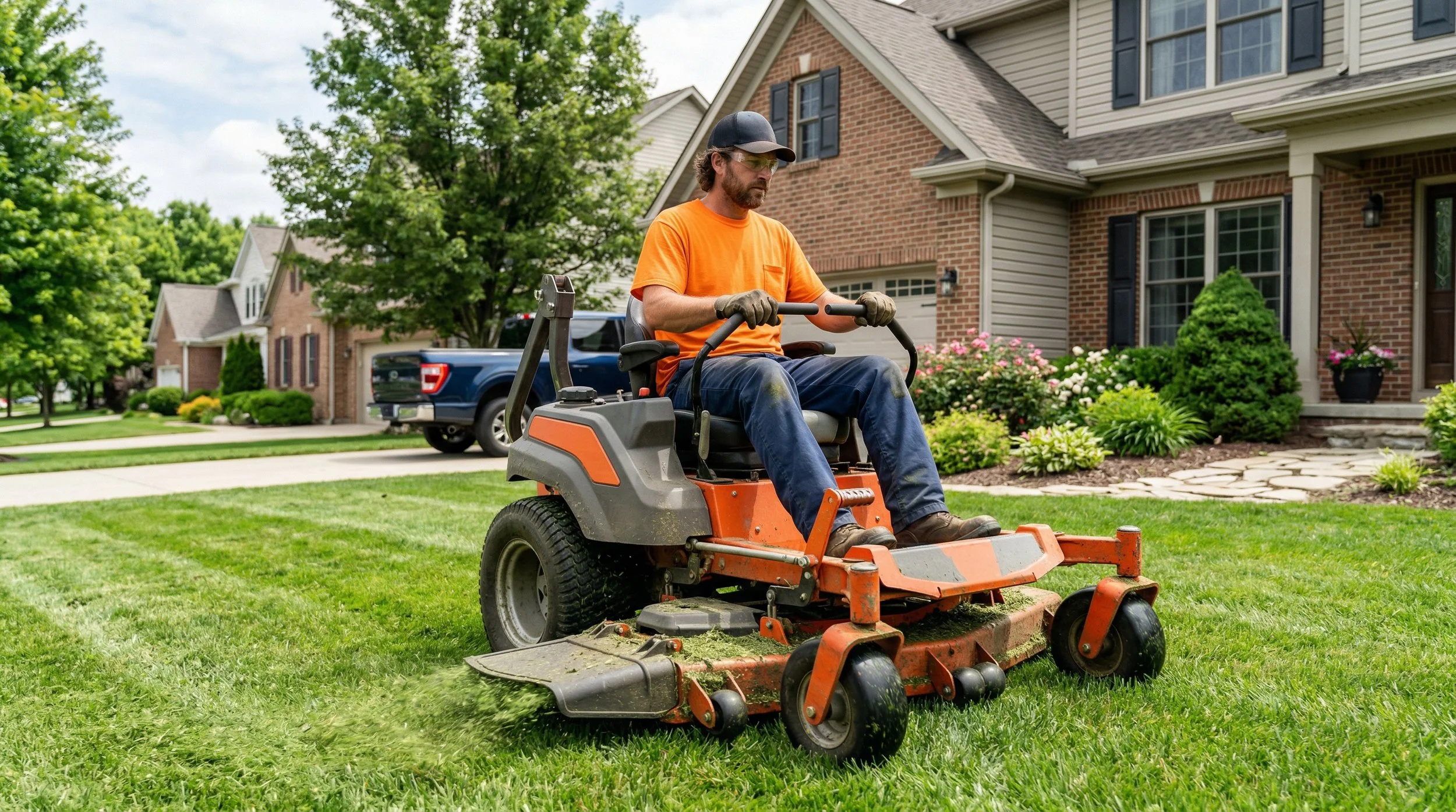
The two rhythms, side by side
Fescue's year peaks twice. Fall is its main event: aerate compacted clay, overseed thin areas while soil is warm, and let cool weather grow deep roots. Spring is the second growth flush, the time to keep it mowed tall and fed modestly. Summer is survival season, managed with height, three to four inches, and deep watering during drought, accepting some thinning as normal. Winter is a rest it mostly spends green.
Bermuda's year has one long peak. It wakes as soil warms in late spring, and from then through early fall it wants frequent mowing, kept short at roughly one to two inches, regular feeding in its growing season, and as much sun as the yard can give it. It shrugs off heat that flattens fescue and recovers from traffic and scalping by running new growth across the damage. At first frost it goes dormant and brown, and its winter is genuinely off: no growth, no feeding, and no expectation of color until spring warmth returns.
Overseeding: opposite meanings for each grass
The word overseeding causes real confusion because it means maintenance for one grass and makeup for the other. On fescue, overseeding is structural: since the grass cannot spread, fall seed is how thin spots get repaired and density is maintained, year after year. Skipping it shows up as a lawn that gets a little thinner each summer and never catches up. On bermuda, overseeding usually means sowing a temporary cool-season grass like ryegrass in fall purely for winter color over dormant bermuda. It is optional and cosmetic, and it carries a cost: the winter grass competes with bermuda during spring green-up if it hangs on too long, which is why plenty of bermuda owners accept the brown winter and skip it.
Whichever grass you have, the professional line is at renovation scale: killing off and reseeding a failed lawn, regrading, or converting a yard from one grass to the other. Identification, a season of correct care, and honest overseeding are well within a homeowner's reach, and Tailored Lawn Care & Landscaping is there for the jobs that go past that line.
Common questions
My yard seems to have both grasses. Is that a problem?
It is common in the transition zone, often fescue in shade and bermuda in sun. Manage each zone on its own grass's calendar, and decide which grass wins any contested area rather than letting them fight unmanaged.
Which grass is less work overall?
It depends on the season you would rather work in. Fescue asks for fall aeration and overseeding plus summer watering. Bermuda asks for frequent summer mowing and feeding, then gives you the winter entirely off.
Can I overseed bermuda with fescue for winter color?
Ryegrass is the usual choice for winter color over bermuda, not fescue. Any winter overseed competes with bermuda at spring green-up, so it is a cosmetic decision with a spring trade-off, not a free upgrade.
Photos in this guide are representative stock images.
← All guides from Tailored Lawn Care & Landscaping← Back to Tailored Lawn Care & Landscaping